
Love and Submission
Play Love and Submission
Love and Submission Screenshots













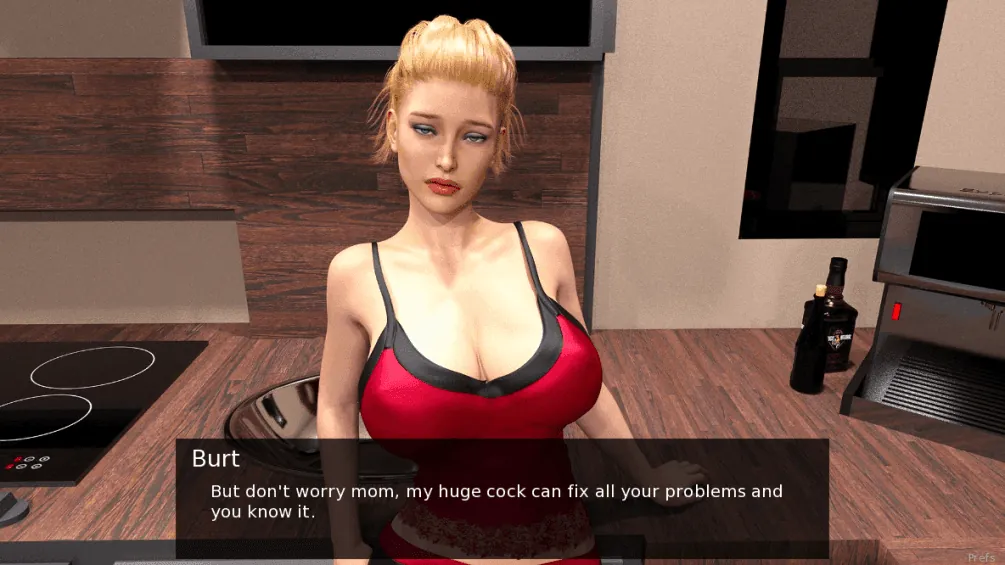
Love and Submission review
Explore gameplay mechanics, story paths, and system requirements for this choice-driven narrative experience
Love and Submission is a choice-driven narrative game that places players in a compelling story centered around relationships and personal decisions. After returning home from two years abroad in Asia, players navigate a transformed family dynamic and community, where their choices directly shape the narrative experience. The game offers branching storylines with two distinct relationship paths, allowing players to pursue either romantic connections or alternative relationship dynamics. With regular updates adding substantial content including hundreds of renders and expanded story progression, this title has evolved into a feature-rich experience available across multiple platforms including PC, Mac, and Android. Understanding the game’s mechanics, story structure, and technical specifications helps players maximize their experience.
Game Overview and Story Structure
Remember that feeling of coming home after a long time away? Everything is familiar, yet somehow… different. That’s the exact sensation Love and Submission masterfully captures from the very first click. You’re not just starting a game; you’re stepping back into a life you left behind, armed with nothing but your own judgment and the desire to reconnect. This isn’t a story you watch—it’s a story you build, one meaningful choice at a time. 🏡✨
At its heart, this is a choice-driven narrative game where your agency is the most powerful tool in the inventory. Every dialogue option, every action, and every quiet moment of hesitation shapes the world around you. The Love and Submission game story begins with a simple, relatable premise: your return home after two years abroad. But from that calm homecoming, a complex web of relationships, old and new, begins to unfold, and the paths you choose will define everything that comes next.
### What is Love and Submission: Core Gameplay Concept 🎮
So, what exactly are you getting into? Think of Love and Submission as an interactive novel where your cursor is a steering wheel. The core gameplay concept revolves entirely around player decision impact game mechanics. There’s no combat, no platforming—your primary interaction is through conversation and choice. The game presents you with situations, often delicate and emotionally charged, and you must navigate them.
The narrative foundation is your re-entry into a home life that has evolved in your absence. Your family dynamics have shifted, old friends have changed, and intriguing new neighbors have appeared on the scene. The genius of the Love and Submission game story is how it uses this relatable setting to frame a deeply personal journey. You’re not a superhero saving the world; you’re a person trying to rebuild connections, and sometimes, explore new, deeper ones.
The game brilliantly structures this through a dual-path system. Early on, you’re presented with a fundamental approach to your relationships. This isn’t just about picking a love interest; it’s about defining your character’s core philosophy. Will you pursue open, romantic connections, or will you seek alternative, perhaps more complex, forms of bonding? This initial direction acts as a narrative compass, influencing which doors open, which characters trust you, and ultimately, which branching storyline paths you are able to walk down.
Pro Tip: Don’t stress about “missing out” on your first playthrough! The game is designed for multiple sessions. Embrace your instincts initially—your authentic choices lead to the most rewarding and personal story.
### Branching Narrative Paths and Player Choice Impact 🌳➡️🎭
This is where Love and Submission truly shines as a choice-driven narrative game. The branching isn’t superficial; it’s structural. Imagine a story not as a single road with a few detours, but as a sprawling garden where each forked path leads to entirely different scenery, encounters, and endings. Your choices don’t just change a line of dialogue; they alter the availability of whole scenes, character arcs, and chapters of the story.
Let’s talk about the brilliant system that makes this all trackable: the Qlog. This in-game journal doesn’t just recap events—it meticulously logs your significant choices, your relationship status with every character, and flags major story beats you’ve triggered or locked yourself out of. It’s your personal guide to the narrative web you’re weaving. Checking the Qlog after a major decision is like a director reviewing the script changes; it shows you the tangible consequences of your role-play.
Here’s a key feature that respects your time and curiosity: the episode ending mechanic. In many narrative games, reaching an ending means the save is over. Here, you can experience a powerful, conclusive final scene for a particular path… and then go right back to explore other avenues from earlier saves. It encourages experimentation and allows you to see the full scope of the Love and Submission romantic paths without losing your progress toward a satisfying conclusion.
To give you a clearer picture, here are some of the key story elements and systems that make this branching world work:
- The Dual-Path Foundation: Your early-game philosophy choice sets a major narrative direction, opening unique scenes and character interactions.
- Expansive Character Roster: Your decisions affect your ties with core family members and new arrivals like Lily, Mira, and Caitlyn, each with their own rich sub-plots.
- The Decision Tracking System (Qlog): A transparent log that shows your impact on the world, helping you understand cause and effect in the narrative.
- Scene Gating: Major choices act as keys, unlocking or permanently locking entire scenes and character moments, making each playthrough distinct.
- Relationship Meters (Hidden/Visible): Your standing with every character shifts based on your actions, influencing their dialogue and availability.
Example: The Ripple Effect of a Single Choice
Let’s walk through a hypothetical to see the player decision impact game philosophy in action. Imagine a scene where your character is asked for a personal favor by a family member, but fulfilling it means breaking a promise you made to a new neighbor, Lily.
- Choice A (Prioritize Family): You help your family. This strengthens your bond with them, unlocking a heartfelt, supportive scene later that evening. However, Lily discovers you broke your promise. Her trust diminishes, and a potential, tender scene where she opens up about her past becomes permanently unavailable. Your path with her shifts toward a more distant, formal relationship.
- Choice B (Honor Your Promise): You politely decline the family and help Lily. Lily is deeply grateful, and her trust meter surges. This unlocks a special, intimate scene a few days later where she shares a personal secret, opening a whole new branching storyline path with her character. However, your family feels slighted. A future event where they collectively support you through a crisis is altered; they are less unified in your aid, leading to a more challenging, solo resolution for that plot point.
See how one decision doesn’t just change a reaction? It actively rewrites future chapters of your story. This is the core thrill of the Love and Submission game story.
### Character Development and Relationship Dynamics 👥💞
The world of Love and Submission is populated by characters who feel authentically layered, thanks entirely to your input. Love and Submission character relationships are not predefined; they are grown, nurtured, neglected, or even damaged through your actions. Every person you meet has their own history, desires, and boundaries, and how you navigate those defines your unique story.
Your immediate family provides the emotional core. Reconnecting with them after two years is a mini-game in itself, full of awkwardness, nostalgia, and potential for renewed closeness. Then there are the new faces: the enigmatic Lily, the perhaps-too-friendly Mira, the complex Caitlyn, and others. They aren’t just romance options; they are full characters with story arcs that can evolve into deep friendship, bitter rivalry, passionate romance, or anything in between, based on your relationship choices gameplay.
The Love and Submission romantic paths are particularly nuanced. Pursuing a romance isn’t about simply selecting “Flirt” options. It’s about consistent character alignment, building trust through actions (not just words), and often, making difficult choices that prioritize that person’s well-being or happiness. A romance path might require you to take their side in a conflict, sacrifice an opportunity, or share a vulnerability of your own. It’s this depth that makes the connections feel earned and significant.
To help you keep track of the central cast and their roles in this dynamic web, here’s a breakdown:
| Character | Relation/Role | Narrative Significance |
|---|---|---|
| Main Character (You) | The Returning Son | Your choices define the tone, morality, and direction of the entire story. You are the catalyst. |
| Family Members (e.g., Mother, Sister) | Core Family | Represent the past and the foundational relationships you must renegotiate. Their arcs are deeply tied to your early choices. |
| Lily | New Neighbor | Often a central figure for new beginnings. Her path is heavily influenced by promises, trust, and emotional honesty. |
| Mira | New Acquaintance | Brings a more spontaneous, unpredictable energy. Her route tests your adaptability and willingness to embrace change. |
| Caitlyn | Changed Friend / New Dynamic | Represents how people evolve over time. Reconnecting with her involves reconciling her past self with who she is now. |
The beauty of this system is that no two players will have the exact same experience with these characters. In one playthrough, Caitlyn might become your closest confidante. In another, a series of miscommunications could make her a source of constant tension. This variability is the hallmark of a true choice-driven narrative game. Your relationship choices gameplay doesn’t just check boxes on a route; it writes a completely original script for every interaction.
Ultimately, Love and Submission offers a profound sense of authorship over your narrative destiny. It understands that the most compelling stories are those we feel responsible for, where every “what if?” is a legitimate question with a discoverable answer. By placing the power of consequence firmly in your hands, it transforms a game about relationships into a deeply personal reflection on connection, desire, and the paths we choose to walk. Your story is waiting to be written. 🖋️❤️🔥
Love and Submission stands out as a sophisticated choice-driven narrative experience that prioritizes player agency and meaningful decision-making. The game’s dual-path system, combined with its branching storylines and character-driven narrative, creates a personalized experience where individual choices genuinely shape the story outcome. With substantial technical requirements and regular content updates adding hundreds of renders and expanded story progression, the game demonstrates ongoing development commitment. The availability across multiple platforms including PC, Mac, and Android ensures accessibility for diverse players. Whether you’re interested in exploring romantic relationship paths or alternative dynamics, the game’s structure encourages multiple playthroughs to fully experience all available content. For players seeking an immersive narrative experience with meaningful choices and evolving character relationships, Love and Submission offers compelling gameplay that rewards exploration and experimentation with different decision paths.