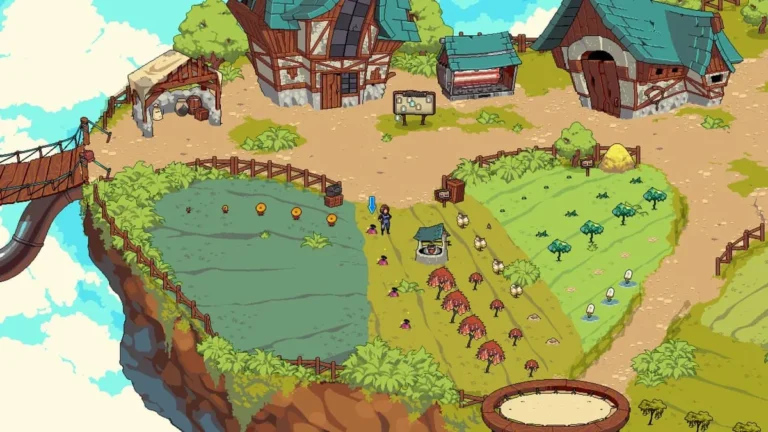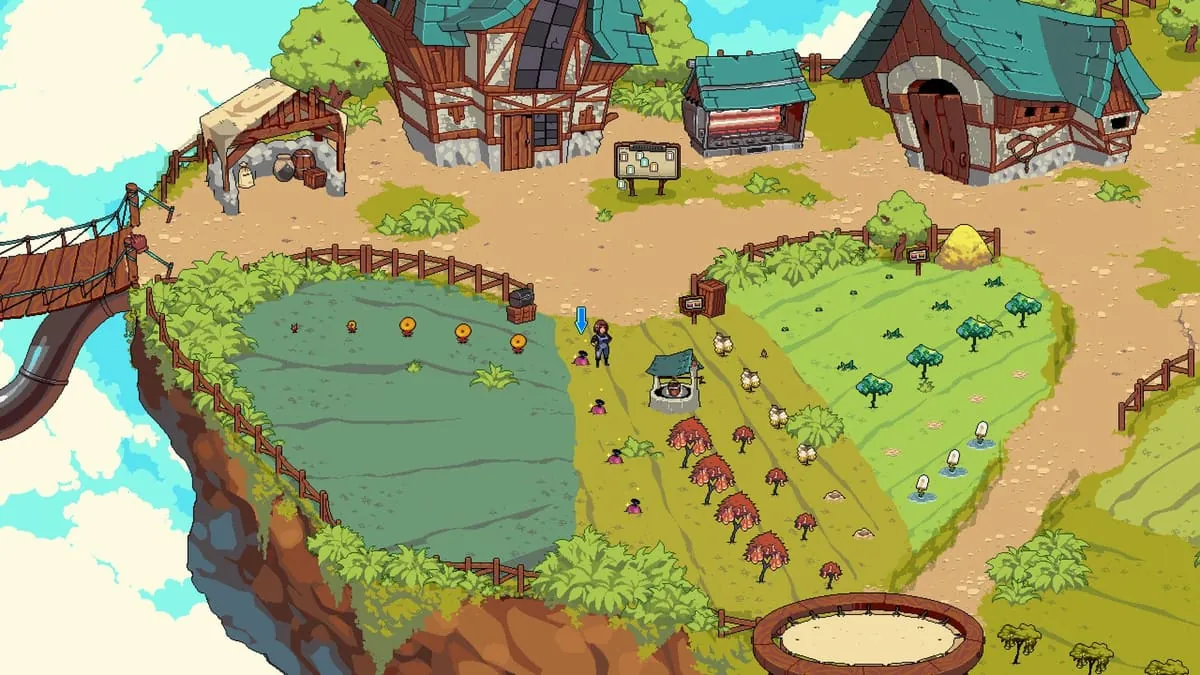
Cloud Meadow Screenshots
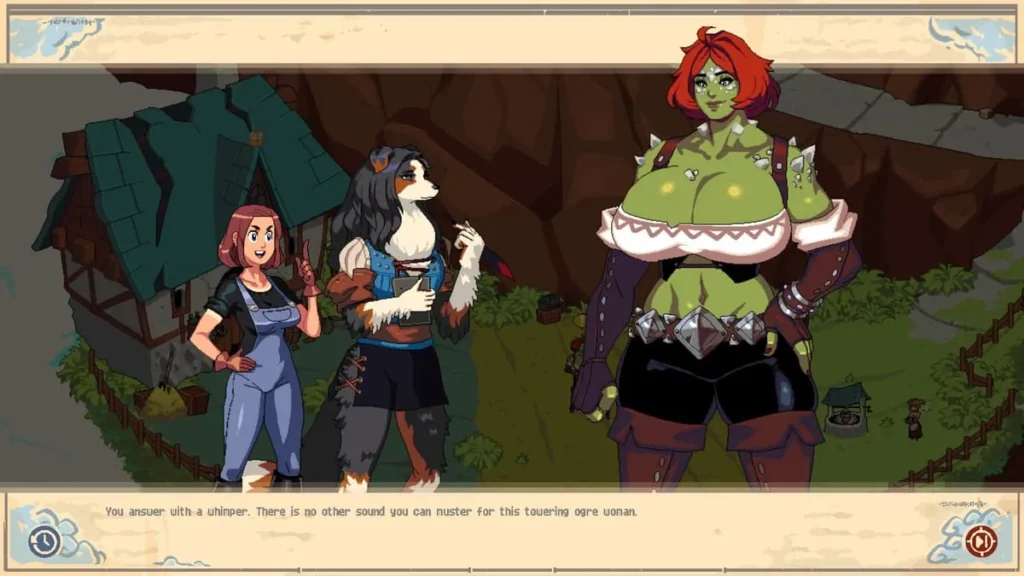
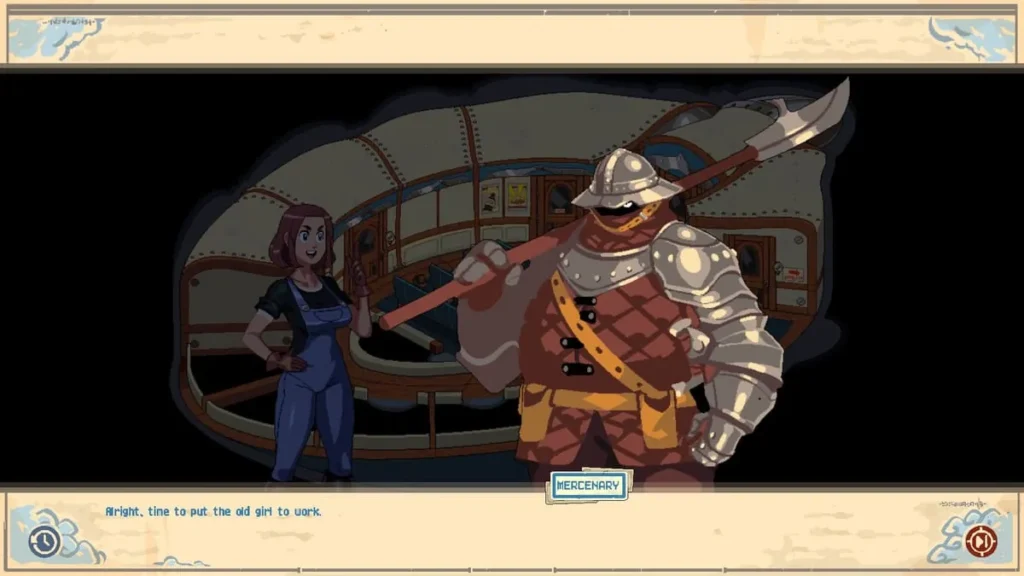


Cloud Meadow review
A practical, story-driven look at Cloud Meadow’s hybrid farming and dungeon adventure gameplay
Cloud Meadow is a hybrid farming and dungeon-crawling game set on floating islands, where you manage a growing homestead, build a team of companions, and dive into tactical turn-based battles. From my own playthrough, it felt like what would happen if a cozy farm sim and a turn-based role-playing game were stitched together with a strong focus on character chemistry and mature themes. In this guide, I’ll walk you through how Cloud Meadow plays in practice, what the progression loop feels like, and the little lessons I learned the hard way so you can decide if this is the right game for your library.
What Is Cloud Meadow and How Does the Game Actually Play?
So, you’ve heard about this game that mixes farming with dungeon crawling and maybe a bit of romance, and you’re wondering what the deal is. 🤔 Is it just Stardew Valley in the sky? A dating sim with monsters? Let me cut through the noise: Cloud Meadow is its own wonderfully unique beast. At its heart, it’s a fantasy life sim where your success in cozy homesteading is directly fueled by your bravery in adventurous exploration, and vice-versa. Think of it as running a small business where your supply chain involves battling slimes in ancient ruins.
You play as an explorer who settles on a remote, fertile floating island. Your job is twofold: rebuild a thriving farm and assemble a capable team to delve into dangerous dungeons below. The Cloud Meadow story isn’t about saving the world from a cataclysmic evil; it’s a more personal, character-driven tale about building a community, uncovering local mysteries, and forming bonds with a diverse cast of humans and mythic creatures. The tone can be light and slice-of-life one moment, and dip into more dramatic, heartfelt territory the next, often based on the choices you make in dialogue.
If you love games where methodical planning meets character-focused storytelling, you’re in the right place. This isn’t a game you rush. It’s a game you live in, day by (in-game) day, learning the rhythms of your land and your companions. Let’s break down exactly what that life looks like.
Story and world: life on the floating islands
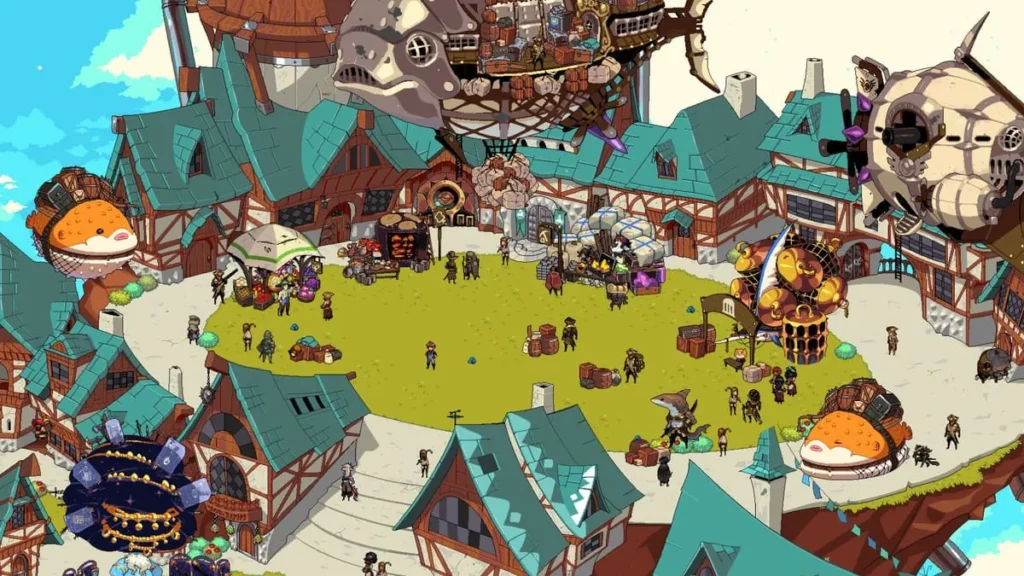
The setting of Cloud Meadow is instantly captivating. You’re not on a regular, boring continent—you’re high above the clouds on the Cloud Meadow floating islands. 🏔️ This is a world where chunks of earth drift in an endless sky, creating isolated ecosystems and communities. Your little plot is one of these islands, a blank canvas of soil and stone waiting for your touch.
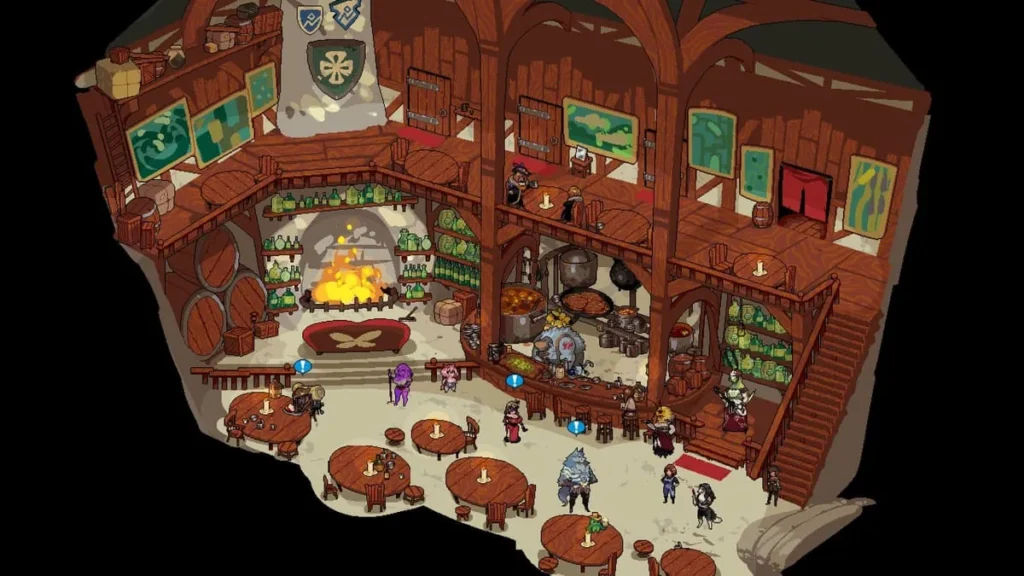
The world-building is delivered not through lengthy cutscenes, but through the environment and its people. You’ll visit small sky-borne settlements, trade with quirky vendors, and accept quests from neighbors with their own problems and dreams. The narrative unfolds through your daily interactions: helping a friend gather rare mushrooms, learning the history of a ruined temple from a scholar, or triggering a special character event by gifting a favorite food. The genius of the Cloud Meadow world is how it seamlessly blends the mundane with the magical. One minute you’re worrying about your turnip yield, and the next you’re discussing ancient sky-whale migrations with a centaur blacksmith. It makes the world feel alive and deeply connected.
This duality is core to the experience. Your peaceful farm life exists in direct contrast to the mysterious, monster-infested dungeons that pockmark the undersides of the islands. The story gently pushes you to explore these places, not just for loot, but for answers about the world’s past and resources to secure your future. It’s a compelling mix that constantly gives you two compelling reasons to play: the pull of home and the call of adventure.
Core gameplay loop: from farm chores to dungeon runs
The Cloud Meadow gameplay is all about a satisfying, resource-driven cycle. A typical day is a balancing act between domestic duties and daring expeditions. You can’t do everything at once—your energy and time are limited—so you learn to prioritize. Here’s what a productive day might look like:
- Morning Farm Tasks: 🌅 Water crops, harvest ripe produce, pet and care for your livestock (which includes some fantastical creatures!), and process materials in crafting stations like the loom or cheese press.
- Midday Management: ☀️ Check in on quests, talk to townsfolk to build friendship, sell excess goods, and plan what to plant next based on what you need for building upgrades or cooking.
- Evening Dungeon Run: 🌌 Gather your combat team, pack some healing items, and head into a dungeon. Fight through rooms of monsters in turn-based combat, solve simple puzzles, grab all the loot you can carry, and hopefully make it back home before collapsing into bed.
This loop is the engine of the game. The farm supports the dungeon runs by providing food for healing, resources for crafting better gear, and money from sold goods. The dungeons, in turn, supply rare minerals for tool upgrades, special seeds you can’t buy, and crafting components for expanding your homestead.
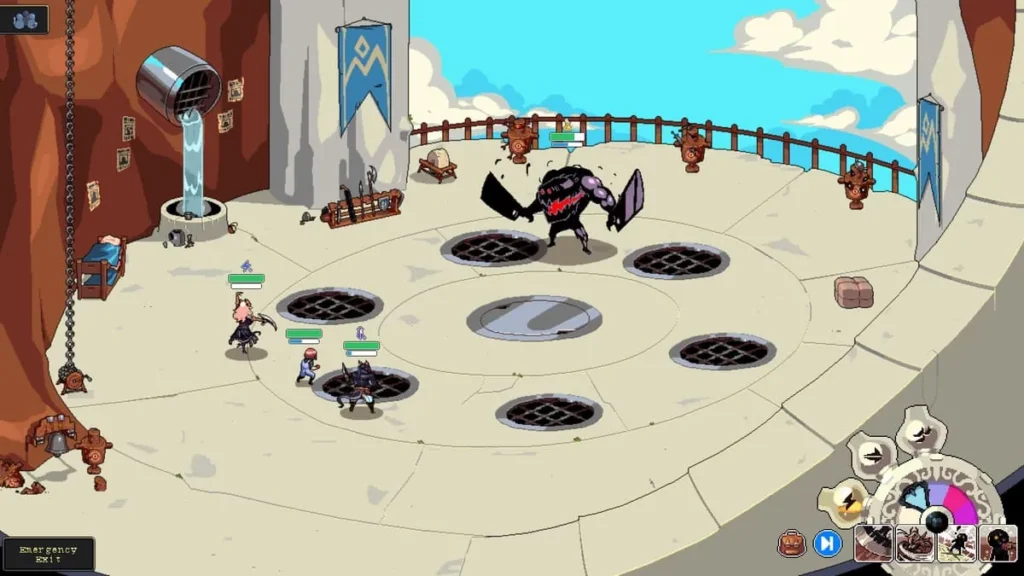
Speaking of combat, let’s demystify it. The turn-based combat in Cloud Meadow is tactical and formation-based. You don’t just mash an attack button. You have a team of up to four characters, each with a unique set of abilities. In battle, you select actions for each member, managing their Skill Points (SP) and health. Positioning matters, as some abilities affect rows or all enemies. Choosing the right team for the dungeon—a balanced mix of damage dealers, tanks, and support—is a big part of the strategy.
To visualize how these two halves of the game feed into each other, here’s a simple breakdown:
| Farm Activity | Produces… | Which Supports… |
|---|---|---|
| Growing Wheat & Raising Cows | Flour, Milk, Cheese | Cooking healing food for dungeon runs; Completing villager requests for rewards. |
| Mining in Dungeons | Iron Ore, Mystic Crystals | Upgrading farming tools for better efficiency; Crafting powerful new weapons. |
| Defeating Monsters | Monster Parts, Rare Fibers | Crafting new buildings & decor; Creating advanced armor sets. |
This beautiful interdependence means you’re always working toward a tangible goal. That load of pumpkins you sold directly funded your new bronze sword. That pile of iron you mined is now part of your upgraded watering can. Every action has purpose, making the core Cloud Meadow gameplay incredibly rewarding.
My first hours with Cloud Meadow: what surprised me most
I’ll be totally honest: my first day was a mess. 🙈 I burst out of my house like a hero, determined to clear a field, plant 50 parsnips, befriend the entire town, and conquer a dungeon—all before lunch. By 10 a.m. (game time), my energy bar was red, I was out of stamina-recovering snacks, and I’d barely scratched the soil. Cloud Meadow gently but firmly taught me its first lesson: pace yourself. This is a marathon, not a sprint.
Here’s a snapshot of my first in-game week, which became a case study in learning balance:
* Day 1-2: The aforementioned burnout. I focused only on farming and socializing, ignoring the dungeon entirely. I was poor and my tools were awful.
* Day 3: I mustered courage for a short dungeon run with my starting companion. We barely made it through three rooms, but the loot included copper ore! Suddenly, an upgrade path was visible.
* Day 4: Used the ore to upgrade my axe, which made clearing my farm faster. Used the saved time and energy to talk to more townsfolk. A character named Kaelen, a gruff but kind beast-folk warrior, mentioned in passing he liked roasted nuts. That tiny, offhand detail stuck with me.
* Day 5: I grew some nuts, roasted them, and gave them to Kaelen. His surprised gratitude and the subsequent conversation that unlocked a fragment of his backstory was my “aha!” moment. The Cloud Meadow story isn’t just in the main quests—it’s woven into these hundreds of small, optional interactions. The cast has genuine personality.
What surprised me most was the density of choice and the pacing. Early on, it can feel overwhelming. You have so many seeds, so many people to meet, so many dungeon floors calling your name. But once you surrender to the game’s daily rhythm and stop trying to “win” in a single day, it becomes meditative and deeply satisfying. You learn that some days are just for farming. Others are dedicated dungeon delves. And sometimes, the most productive thing you can do is just walk around town, listening to stories.
The turn-based combat also took some getting used to after playing more action-oriented hybrids. It’s slower and more thoughtful. My first major defeat came because I just attacked mindlessly instead of using my healer’s support abilities. Once I started treating combat like a puzzle—figuring out which enemy to disable first, when to defend, when to unleash a big SP-costing skill—it clicked and became a highlight.
If you’re coming to Cloud Meadow, my biggest piece of advice is to embrace the slow burn. Let the story unfold through small moments. Celebrate the small upgrades. Don’t fight the core loop—lean into it. This Cloud Meadow review of the early hours boils down to this: the game asks for a little patience upfront but pays you back tenfold with a rich, cohesive, and charming experience where every planted seed and every slain monster feels like a step toward building your own little legend in the sky. 🚀
Cloud Meadow blends relaxed farm management with more demanding, tactical dungeon crawling, all wrapped in a world that leans heavily on character interactions and mature themes. Once you settle into the rhythm of tending your fields, upgrading your homestead, and venturing into dungeons with a carefully chosen team, the game reveals a satisfying loop that rewards planning and curiosity. If you enjoy titles that give you time to breathe on the farm, then challenge you with strategic battles and relationship-driven storytelling, Cloud Meadow is worth exploring. The best way to know if it fits your style is to dive in for a few in-game weeks and see how its mix of systems and personalities grows on you.