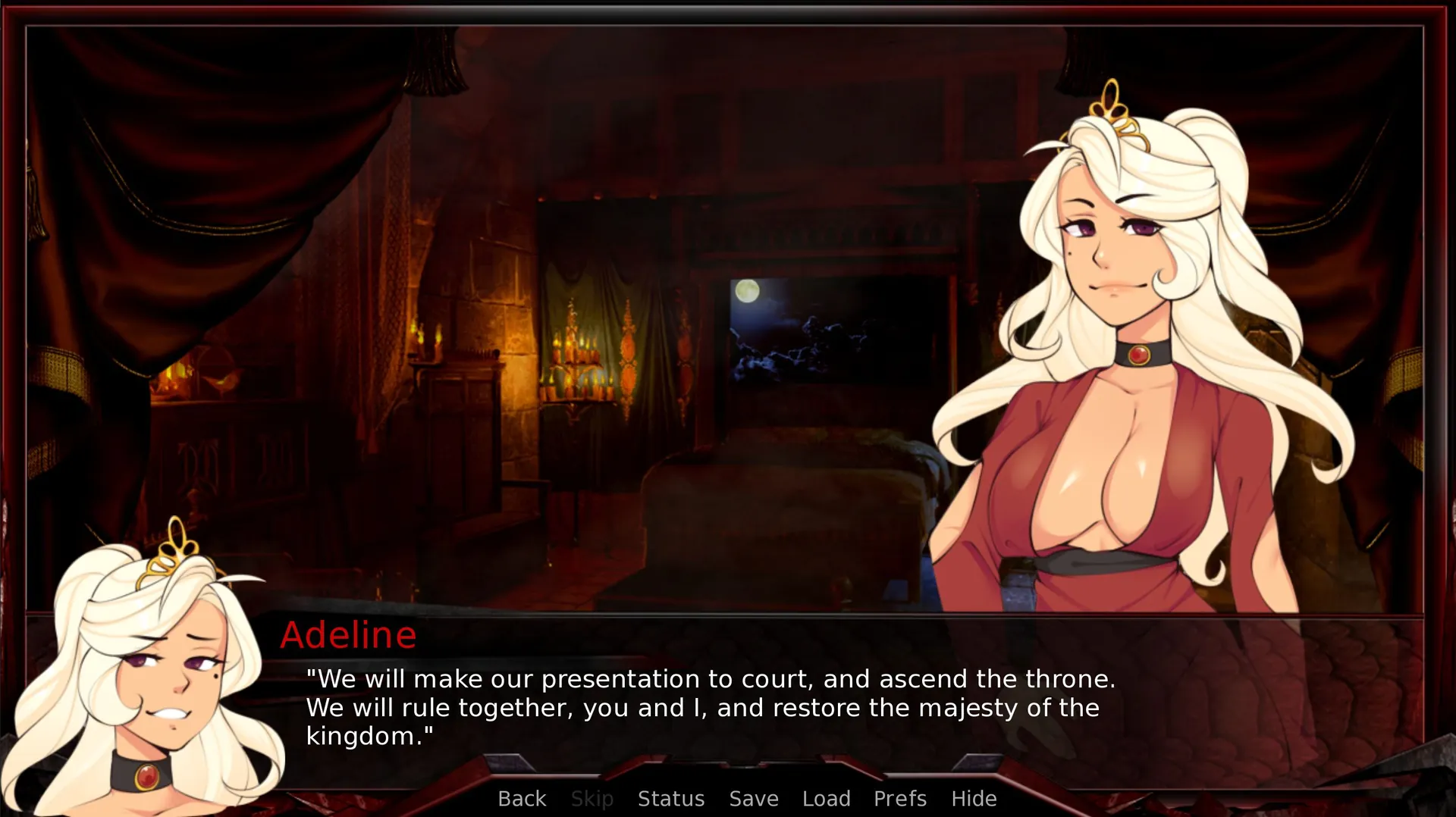
Corruption Time
Play Corruption Time
Corruption Time Screenshots




Corruption Time review
Everything you need to know about gameplay mechanics, strategies, and character interactions
Corruption Time stands as a notable entry in the adult gaming landscape, offering players an immersive text-based adventure experience. This guide explores the core mechanics, character systems, and progression pathways that define the game. Whether you’re new to the title or looking to deepen your understanding of its systems, this comprehensive overview covers everything from initial setup to advanced gameplay strategies. Understanding the game’s unique stat system and character interaction mechanics is essential for maximizing your experience and unlocking all available content.
Understanding Core Gameplay Mechanics
So, you’ve just started your journey in Corruption Time and you’re staring at the screen, wondering where to even begin. 🤔 I get it. The first time I booted it up, I was overwhelmed by the sheer number of bars, meters, and dialogue choices. It felt less like playing a game and more like piloting a spaceship! But here’s the secret: once you understand its core systems, everything clicks into place, and the game transforms into this incredibly deep, reactive experience.
This chapter is your lifeline. We’re going to strip down the Corruption Time gameplay mechanics to their bare essentials. Think of this as your friendly neighborhood guide to the stat system, how fights really work, and how to make your camp a powerhouse. By the end, you’ll not only know what to do—you’ll know why you’re doing it. Let’s dive in. 🚀
How the Stat System Works
At the heart of every decision you make in Corruption Time lies its intricate stat system. This isn’t just about being “strong” or “smart.” It’s a dynamic web of attributes that directly shapes your world, your relationships, and the story itself. Ignoring it is a surefire way to hit a brick wall. Trust me, I learned that the hard way when I failed a simple persuasion check because I’d completely neglected my Social stat! 😅
Your character is defined by several core attributes. Strength governs physical tasks and some combat outcomes. Agility affects your speed in encounters and exploration success. Social is your key to convincing, charming, or intimidating other characters. And then, there are the two most unique and critical stats: Corruption and Lust.
These aren’t just numbers; they’re narratives in meter form. Your Corruption level reflects the moral compromises you’ve made, opening up new, often darker, interaction options and story branches that are simply unavailable to a “pure” character. Lust influences the nature of your personal interactions, making certain characters more receptive (or vulnerable) to your advances. Managing these isn’t about min-maxing; it’s about consciously choosing the kind of persona you want to role-play.
But how do these stats actually affect play? Let’s say you’re exploring a ruined temple (part of our exploration guide later). An Agility check might let you silently disable a trap. A Strength check could allow you to brute-force a door. A high Corruption might let you perform a sinister ritual on an altar for a power boost, while a low Corruption character wouldn’t even see that option. Every stat check is a fork in the road.
To keep this all clear, here’s a breakdown of the primary stats and their domains:
| Stat | Primary Effect | How to Increase It |
|---|---|---|
| Strength | Physical challenges, certain combat moves, intimidating displays. | Winning physical contests, lifting heavy objects, specific training events. |
| Agility | Stealth, trap disarming, dodging in combat, accessing hidden areas. | Succeeding on stealth checks, winning chase sequences, acrobatic actions. |
| Social | Persuasion, deception, bargaining, and general charisma. | Successful dialogue choices, winning debates, completing certain character quests. |
| Corruption | Unlocks morally ambiguous options, dark powers, and alternate story paths. | Choosing “corrupt” actions in events, using certain items, sacrificing resources for personal gain. |
| Lust | Affects romance and intimate interaction outcomes, opens unique relationship dialogues. | Flirtatious dialogue success, giving specific gifts, winning certain encounter types. |
This stat system guide is crucial because your choices permanently nudge these meters. You can’t be everything at once. Early on, I recommend picking a focus. Want to be a silver-tongued manipulator? Pump Social and a dash of Lust. Prefer a brooding, power-hungry tactician? Corruption and Strength are your friends. This focus will inform your entire resource management strategy, from what items you seek to which allies you cultivate.
Combat and Interaction Mechanics
Forget turn-based menus or real-time button mashing. The combat system tutorial for Corruption Time starts with this truth: combat is just another form of conversation, and often, you can talk your way out of it. ⚔️💬 When an encounter triggers—be it a bandit ambush or a territorial beast—you’re first presented with a choice: Fight, Flee, or Talk.
Choosing “Fight” transitions to a tactical interface where your stats come into play. Strength determines damage output with melee weapons, Agility affects your chance to hit and dodge, and a high Social stat can even allow for taunts that lower enemy morale. But here’s the kicker: your Corruption and Lust levels can unlock special combat actions. A high Corruption might give you a “Brutal Finisher” that yields more resources but horrifies onlookers. A high Lust could provide a “Distracting Allure” move that temporarily confuses humanoid foes.
However, the real magic lies in the “Talk” option. This is where character interaction mechanics shine. Using your Social stat, you might convince the bandits you’re not worth the trouble. With high Corruption, you could intimidate them by threatening a fate worse than death. With sufficient Lust, you might even flirt with the bandit leader to sow discord in their ranks. Succeeding in these dialogue checks often ends the encounter without a fight, granting different (and sometimes better) rewards.
Let me give you a personal case study. Early on, I stumbled upon a camp of scavengers blocking a bridge. My Strength was low, and a direct fight would have been costly. Instead, I used my invested Social points to notice their disheveled state and offered them some of my spare food (a resource management choice!). This compassionate option, available because of my low Corruption, not only granted me safe passage but later made them friendly traders at my camp. That one interaction, avoiding combat entirely, shaped my game for hours.
This seamless blend is the genius of Corruption Time gameplay mechanics. Every hostile face is a puzzle with multiple solutions. Do you have the stats to solve it peacefully? Do you want to? The consequences ripple outward, affecting your reputation, your available allies, and the state of the world.
Progression and Resource Management
This is where your grand plans live or die. Progression pathways in Corruption Time aren’t linear. You won’t just go from Level 1 to Level 2. Instead, you grow horizontally by strengthening your camp, deepening relationships, and unlocking new regions. Your resource management strategy is the engine that makes this possible. 🏕️💎
Resources come in many forms: Money (the universal tool), Food (vital for camp morale and healing), Materials (for building and crafting), and Unique Items (often tied to character quests or exploration). Earning money isn’t just about looting; it’s about engaging with the world. Complete quests, trade shrewdly with merchants, or even gamble if your Agility is high enough. My go-to early game tactic was to focus on exploration to find relic sites, sell the artifacts for a hefty profit, and reinvest that cash into camp upgrades.
Ah, the camp! This is your home base and your most important project. Upgrading the camp’s facilities provides massive passive benefits. Build a workshop to craft better gear, a garden to grow a steady food supply, or a lounge to improve relationships with followers who reside with you. Each upgrade requires specific materials and money, forcing you to prioritize. Do you build the infirmary to heal your wounds faster, or the training grounds to passively increase your Strength? Your choice defines your progression pathways.
Exploration is your primary driver for finding these resources. Our exploration guide tip: always check your map for points of interest, but remember that many of the best treasures are hidden. A high Agility stat lets you search for hidden compartments. A high Perception (often a derivative stat) can spot distant landmarks leading to secret caves. I once spent an in-game week thoroughly surveying a “barren” canyon, only to find a hidden entrance to a treasure vault behind a waterfall—a haul that funded my next three camp upgrades!
Finally, your choices carry immense weight. The game’s consequence system means that helping one faction might permanently alienate another. Robbing a merchant might give you a short-term gain but lock you out of his unique wares forever. This is where your stat investments pay off, offering you alternative solutions to problems that seem binary.
To get you started on the right foot, here’s an actionable checklist based on my own early-game stumbles and successes:
- Secure a steady food source first. Whether it’s upgrading your camp’s foraging post or befriending a hunter, running out of food cripples your ability to explore.
- Specialize your stats early. Pick two core stats (e.g., Social & Agility) to focus on for the first few hours. A specialist can overcome specific challenges a generalist cannot.
- Talk before you fight. Always exhaust the dialogue options in an encounter. The rewards for a peaceful resolution are often more valuable than the loot from a fight.
- Invest in one camp upgrade at a time. Don’t scatter your precious materials. Completing one upgrade fully provides an immediate, tangible benefit that helps you gather resources for the next.
- Save before major exploration trips. This is your safety net. Finding a new area can lead to unexpected stat checks or encounters you might not be prepared for.
Mastering the Corruption Time gameplay mechanics is a journey of constant learning and adaptation. There’s no single “right” way to play, only the path you carve with your stats, your resources, and your choices. By understanding this deep interplay between numbers and narrative, you stop just playing the game and start truly living in its world. Now, go forth—your camp, and your story, await. 🌟
Corruption Time offers a complex and layered gameplay experience that rewards careful planning and strategic decision-making. By understanding the stat systems, mastering resource management, and thoughtfully navigating character relationships, players can unlock the full depth of content the game provides. The interconnected nature of character routes and progression paths means that each playthrough can feel distinct based on your choices. Whether you’re focused on specific character storylines or exploring all available content, the game’s mechanics support diverse playstyles. Take time to experiment with different approaches, and remember that understanding the consequences of your choices will significantly enhance your overall experience.